A CRC/TRR 289 research team from the Universities of Marburg, Giessen and Essen (including the Bingellab) investigated how treatment expectations influence treatment success and how homeopathy uses these effects. Homeopathy is often presented as having no effect at all because no effect beyond the placebo effect has been proven. Globules do not contain any pharmacologically active ingredients that could rationally explain an effect, yet both patients and homeopaths report positive effects for various disorders. How can this be explained? Read the original publication here.
News
The Bingel Laboratory
Translational Pain Research Unit
University Medicine Essen
Prof. Dr. Ulrike Bingel



News
New publication in Frontiers in Psychology
New publication in the journal Pain
Interdisciplinary multimodal pain treatment (IMPT) represents an effective treatment option for chronic pain. Alas, it is also a very expensive and personnel-intensive intervention. Although IMPT could be accomplished in a resource-saving day hospital setting, there is no general insurance coverage for it and thus, IMPT is usually conducted in an in-patient setting. In this study, members of the CRC compared the differences in treatment outcome between, an otherwise identical, ambulatory and in-patient IMPT, at the back pain center Essen, in a matched cohort. Our data provide novel insights by suggesting at least equal effectiveness of ambulatory compared with in-patient IMPT for patients with chronic back pain. Moreover, ambulatory treatment seemed partly superior, with greater improvements in pain-related disability 3 months and in pain intensity 6 months post treatment. This advantage could have been driven by a larger gain in pain-related self-efficacy, which was already present, directly post-treatment for ambulatory patients. Read the english publication led by Dustin Maser and Ulrike Bingel in the journal Pain here.
New comment in the journal Brain
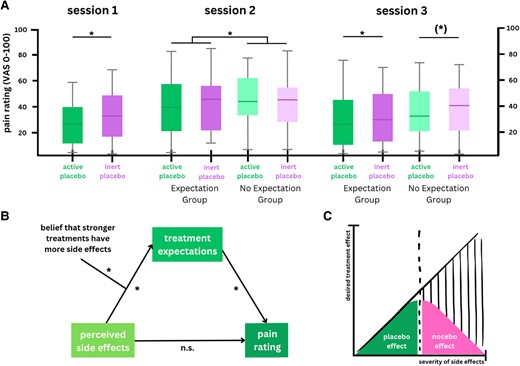
The therapeutic effect of medicines is determined by more than their pharmacological properties. Factors such as the colour of a tablet, its taste and even its price have been found to significantly influence efficacy. This insight has sparked optimism about the potential to enhance drug effects by tweaking these and other features to optimize therapeutic outcomes. In a new article published in Brain, Schenk and colleagues add a somewhat counter-intuitive factor to the list of features that could be targeted to boost the efficacy of a drug: side effects. Read the english commentary by Katja Wiech, Helena Hartmann, and Ulrike Bingel in the journal Brain here. You can find the original study here.
New paper about a brain connectivity signature of pain-related learning
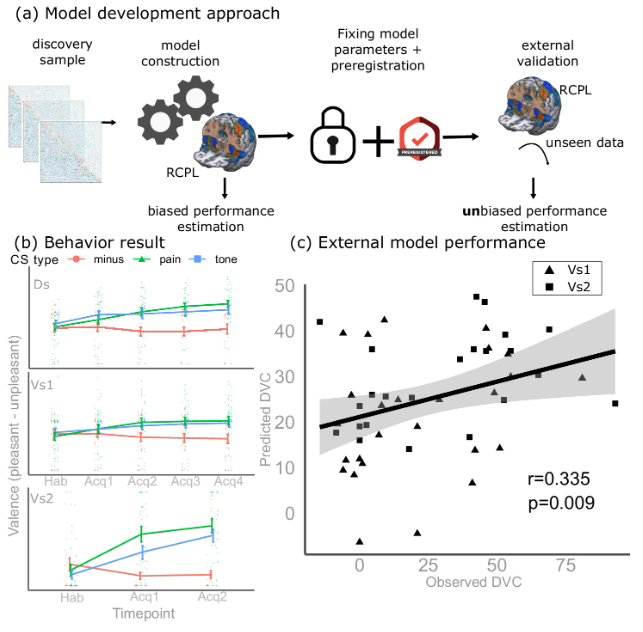
In a collaboration with Tamas Spisak's lab, we show a predictive model based on brain connectivity that explains individual differences in pain learning and shows promise as a biomarker in translational pain research. Read the full article here.
Postdoc wanted!
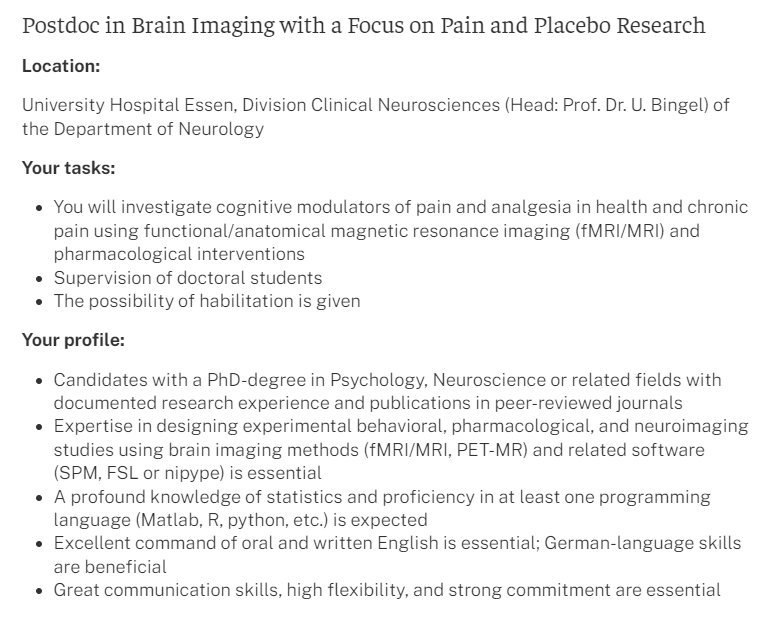
Become a part of the Bingellab: We are looking for a motivated Postdoc in Essen! Topic: Cognitive modulators of pain and analgesia in health and chronic pain as part of the CRC/TRR 289. Methods: Functional/structural MRI and pharmacology. More information here.
Boys Day at the Bingellab!
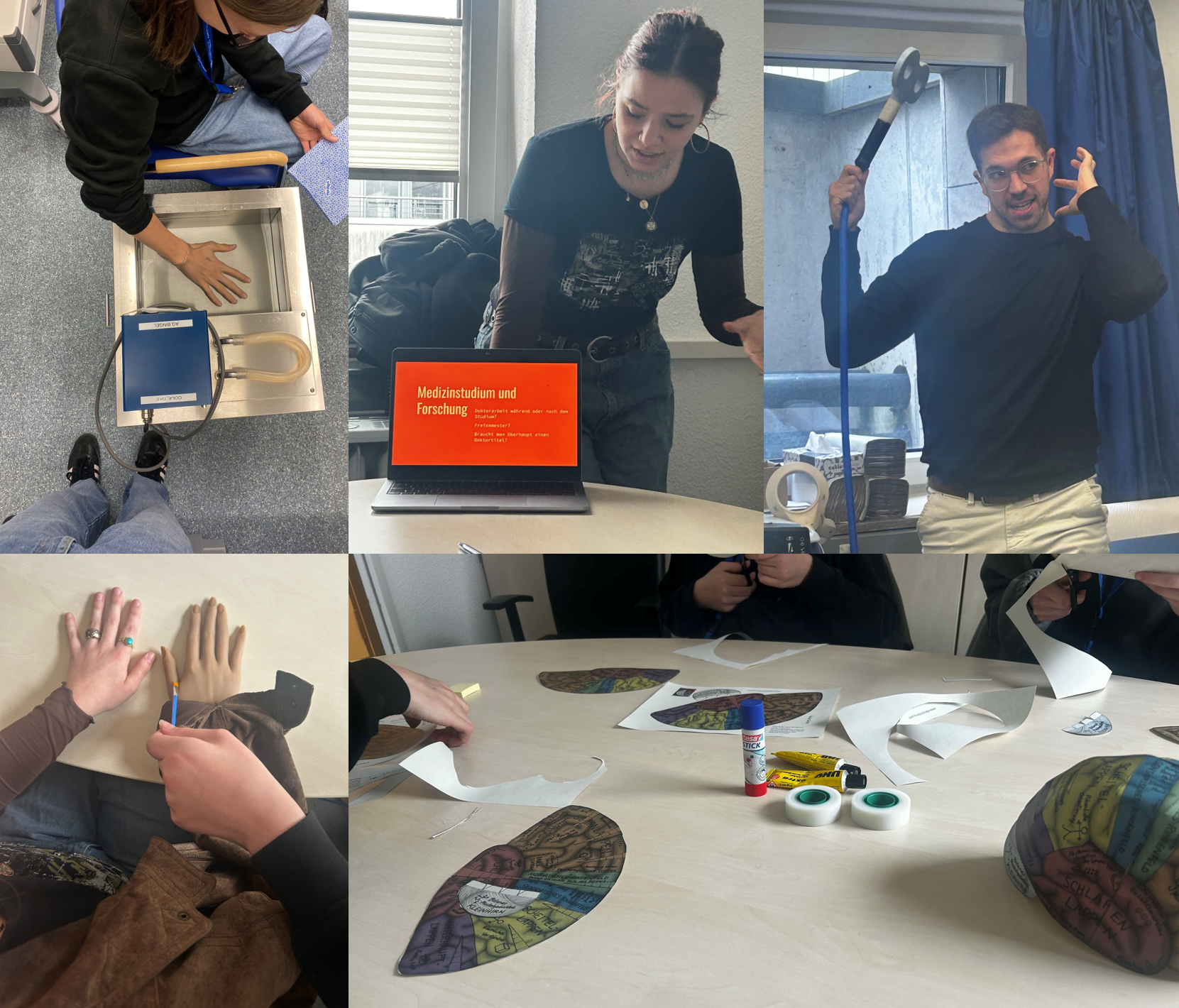
On the 25th of April, two boys interested in science spent the day in the lab for Boys Day. We had lots of fun with the rubberhand illusion, information about studying medicine and doing science at the same time, talking about transcranial magnetic stimulation, crafting brain helmets out of paper, and measuring pain with the cold pressor task.
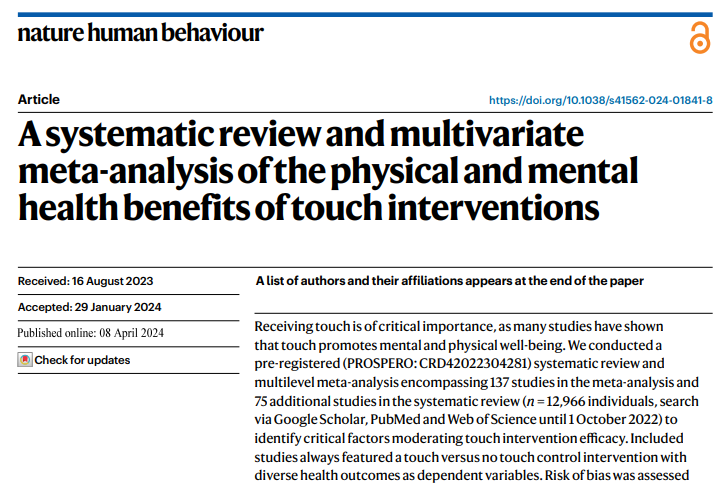
New paper about touch benefits
Receiving touch is of critical importance, as many studies have shown that touch promotes mental and physical well-being. But what is the current status quo of research? Which moderators contribute to positive effects of touch on mental and physical health? Helena Hartmann, together with collaborators from Amsterdam and Bochum, published a systematic review and multivariate meta-analysis of the physical and mental health benefits of touch interventions. Read the study published in Nature Human Behaviour here.
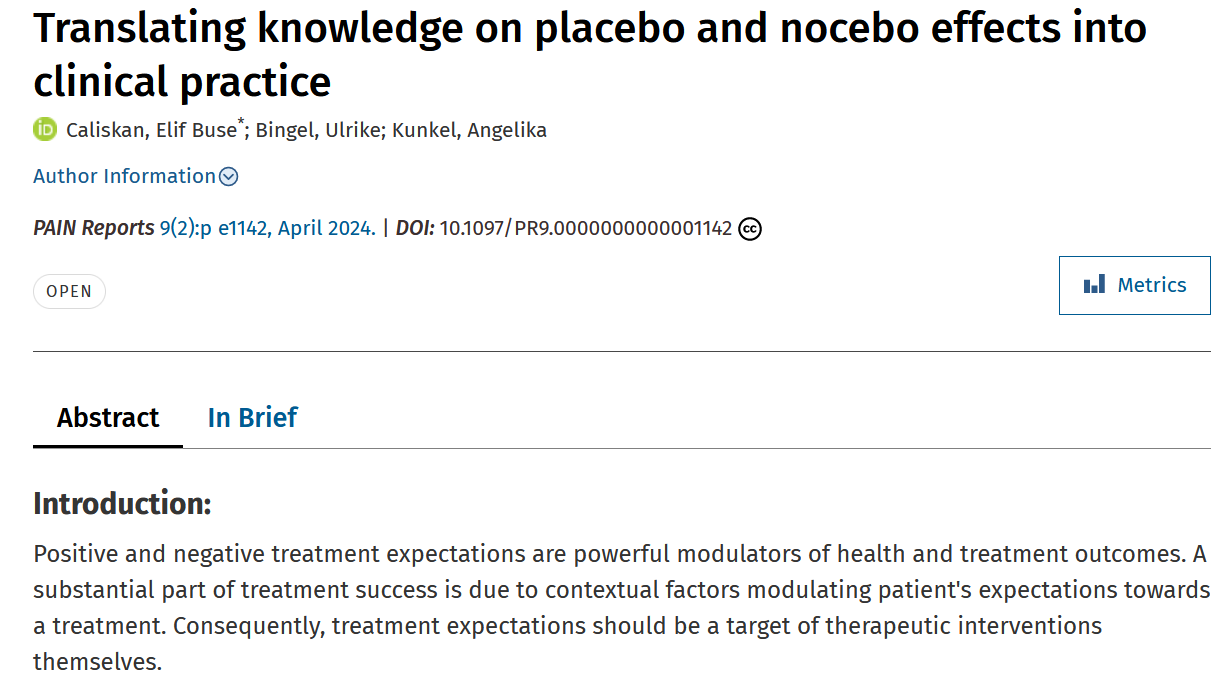
New paper about treatment expectations
Treatment outcome is strongly influenced by treatment expectations. Modifying expectations by targeting contextual factors can substantially improve therapy success, making them a valuable focus for therapeutic interventions. Elif Buse Caliskan, Ulrike Bingel and Angelika Kunkel highlight the neurobiological underpinnings of treatment expectations as well as strategies to modulate contextual factors to optimize treatment outcomes in daily clinical settings. Their article was published in Pain Reports and can be read here.
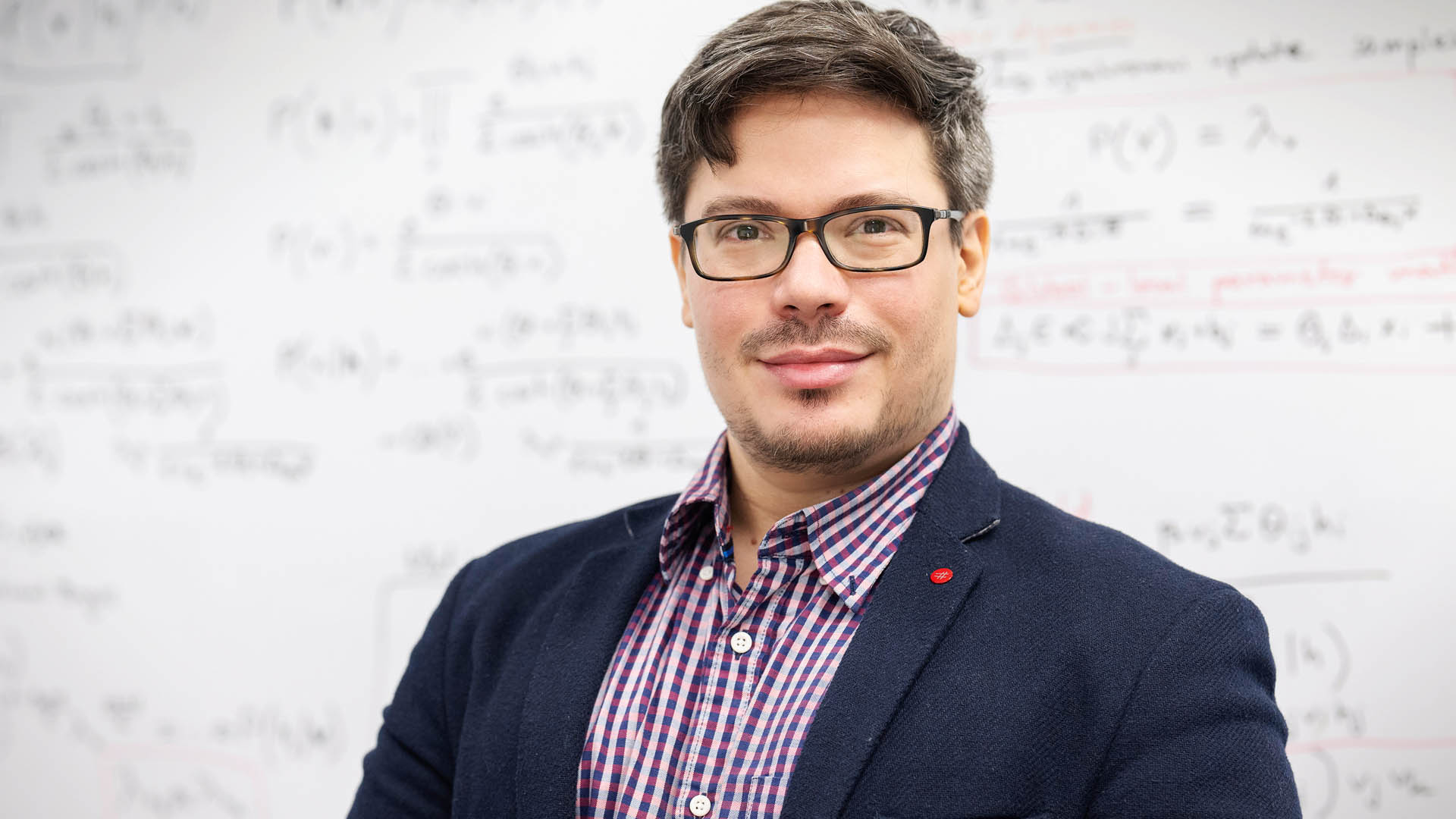
Congrats Prof. Tamás Spisák!
How does our brain work? Is our knowledge sufficient to predict individual human behavior? Dr. Tamás Spisák, new Professor of Predictive Neuroscience at the Faculty of Medicine at the University of Duisburg-Essen, is developing biomarkers. Read more about his future plans here (picture UDE/Bettina Engel-Albustin). We are so happy for him and wish him all the best in this new role!
Helena Hartmann wins Open & Reproducible Science prize!
And we have another celebratory event: Helena recently won the Open & Reproducible Science prize of the Society for Social Neuroscience, in the category "human social neuroscience". Helena employs state-of-the-art Open Science practices in her own research, including preregistration of fMRI studies and sharing code and data on the Open Science Framework. She is an active contributor to the field and promotes Open Science at many different levels, with the overarching aim of making open-access online resources available to the scientific community, especially early career researchers. Helena is also an editor at two important science outlets that promote Open Science: Collabra: Psychology and PCI Registered Reports. Among her many contributions, Helena has created and now curates a GitHub repository of helpful research tools and resources for scientists called “Awesome PhD” and is part of ARIADNE, a scientific navigator to help you through the resource jungle.

The Bingel Laboratory
Prof. Dr. med. Ulrike Bingel
Clinical Neurosciences
University Hospital Essen
Department of Neurology
Hufelandstraße 55
45147 Essen
Germany
Fon: +49 (0) 201 723 - 2446
Fax: +49 (0) 201 723 - 6882
Mail: ulrike.bingel@uk-essen.de
Copyright 2021 - Bingel Laboratory