Huge congrats to Dr. Balint Kincses, who has received the 2026 IFORES Career Kickstart grant for his project titled "Layers of pain: uncovering the mechanisms in the cortical integration of bottom-up and top-down processes in pain perception and its modulation using ultra-high field fMRI". He will conduct his work at the Erwin L. Hahn Institute using 7 Tesla neuroimaging to differentiate the role of different cortical layers.
IFORES grant for Dr. Kincses
The Bingel Laboratory
Translational Pain Research Unit
University Medicine Essen
Prof. Dr. Ulrike Bingel



News

IFORES grant for Dr. Kincses

New publication: Experience shapes placebo pain relief through additional brain pathways
How does a placebo reduce pain? Our study led by Tamas Spisak suggests that the answer depends on how the placebo effect is induced. We combine brain imaging data from 16 studies involving 409 participants: Verbal suggestions & learning through experience recruit overlapping—but partly distinct—brain mechanisms.
Rather than reflecting inconsistency across studies, these differences provide important clues about the biology of placebo pain relief. The study also highlights the value of pooling participant-level neuroimaging data across labs. By embracing heterogeneity instead of treating it as a problem, we gain a richer understanding of how the brain supports pain relief—ultimately moving toward more personalized treatment approaches.
We are deeply grateful to all our collaborators for their willingness to share data, expertise, & ideas. Their commitment to open, transparent, & reproducible science made it possible to answer a question no single study could have addressed alone. More info: placebo-imaging-consortium.github.io

Article feature in Frontiers
The research topic in the journal Frontiers in Psychology on "Optimizing the Therapeutic Potential in Clinical Settings: Leveraging Placebos and Mitigating Nocebo Effects" now includes three contributions from our lab! Thanks Frontiers for pushing this important topic!
[1] "Optimized communication during risk disclosure to reduce nocebo headache after lumbar puncture - a study protocol" (Asan et al., 2025)
[2] "From catastrophizing to catalyzing: does pain catastrophizing modulate the beneficial impact of open-label placebos for chronic low back pain?" (Caliskan et al., 2025)
[3] "The association between test anxiety, learning strategies, and open-label placebo effects on academic test performance" (Frisaldi et al., 2025)
Congrats Dr. Krüger!
We warmly congratulate our medical doctoral student Isabel Krüger, who passed her doctoral defense last week! She wrote her thesis in the Bingellab on "The role of dopaminergic neurotransmission in inducing positive treatment expectations and its effects on pain perception", which also resulted in a publication. We wish Isabel all the best for the next steps in her career!

Congrats Dr. Caliskan!
Huge congratulations to our (former) medical doctoral student Elif Buse Caliskan, who passed her doctoral defense today with flying colors! She wrote her thesis in the Bingellab on "The role of anxiety in nocebo hyperalgesia and its impact on pain perception". We wish Elif all the best for the next steps in her career!

Do you want to support our research?
We are currently looking for support with our experimental studies in Essen, particularly with MRI measurements but also general research assistant tasks. Feel free to download and forward this ad to interested parties here. If you have any questions, feel free to reach out to Katarina Forkmann (katarina.forkmann@uk-essen.de).
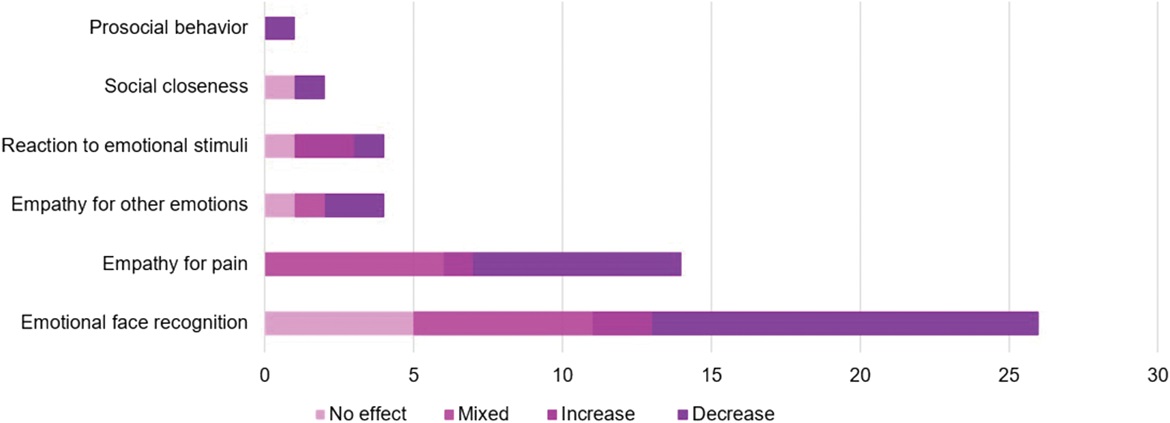
New publication: A systematic review on the effects of pain modulation on social emotions and behaviour
Helena Hartmann and colleagues systematically reviewed 50/2060 screened studies that looked at how changing someone’s own pain experience — through substances like opioids, acetaminophen, cannabinoids, placebos, alcohol, or hypnosis — also affects how people feel and respond to others’ emotions and pain. The authors found mixed and inconsistent effects, meaning some types of pain modulation sometimes increased or decreased social cognition abilities, with the most consistent and replicated result being that placebo analgesia reduced empathy for others’ pain. However, because the studies were very different from each other and often had small sample sizes or specific study designs, a lot more work is needed to understand how our own pain influences social feelings and behavior overall. Read the full publication in the journal Pain here.
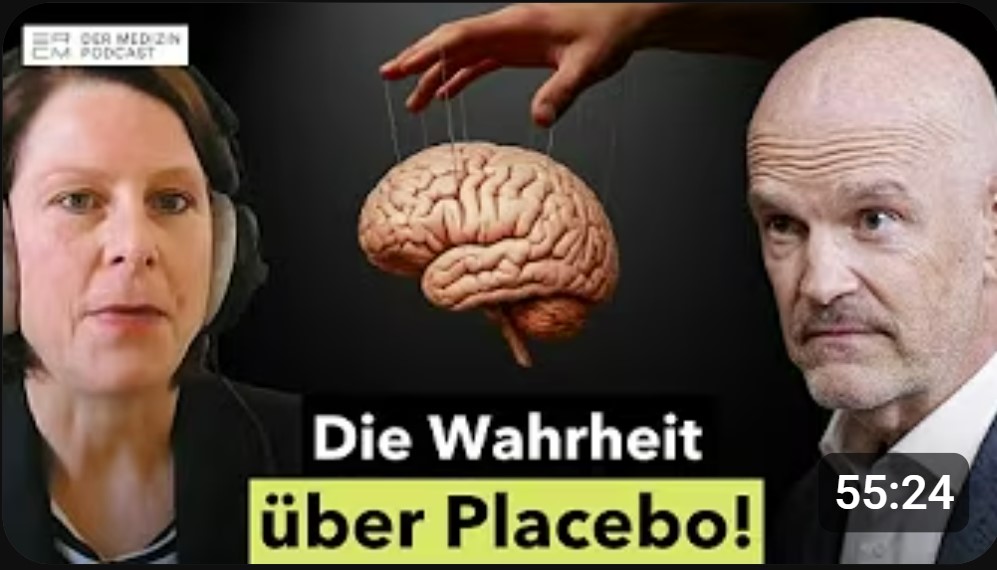
New podcast episode on the placebo effect
A new (German) podcast episode from the ERCM Medizin Podcast with Ulrike Bingel talks about the power of expectations, its neurobiological mechanisms, doctor-patient communication and the importance of trust in this relationship! Watch the full episode here.
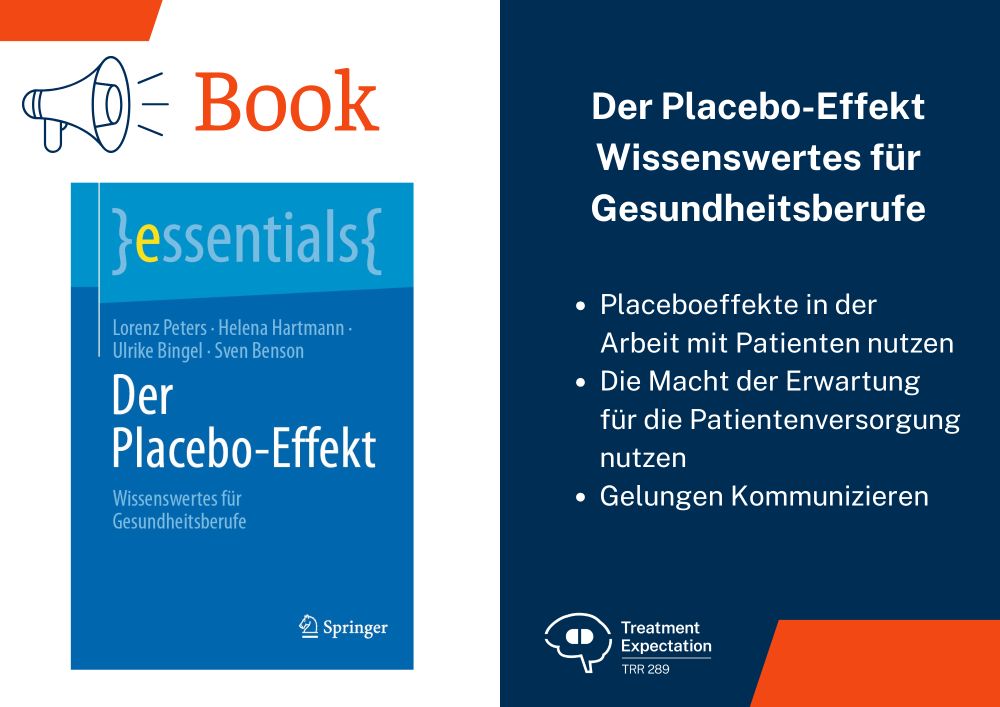
New Springer essentials book: The placebo effect explained for healthcare professionals
Today we have something about science communication! This new (German) book is aimed at healthcare professionals, so everyone working with or around patients: How can you use placebo effects when working with patients? How can you harness the power of expectation in patient care? How can you communicate successfully?
Order and read it here as a physical copy or ebook.
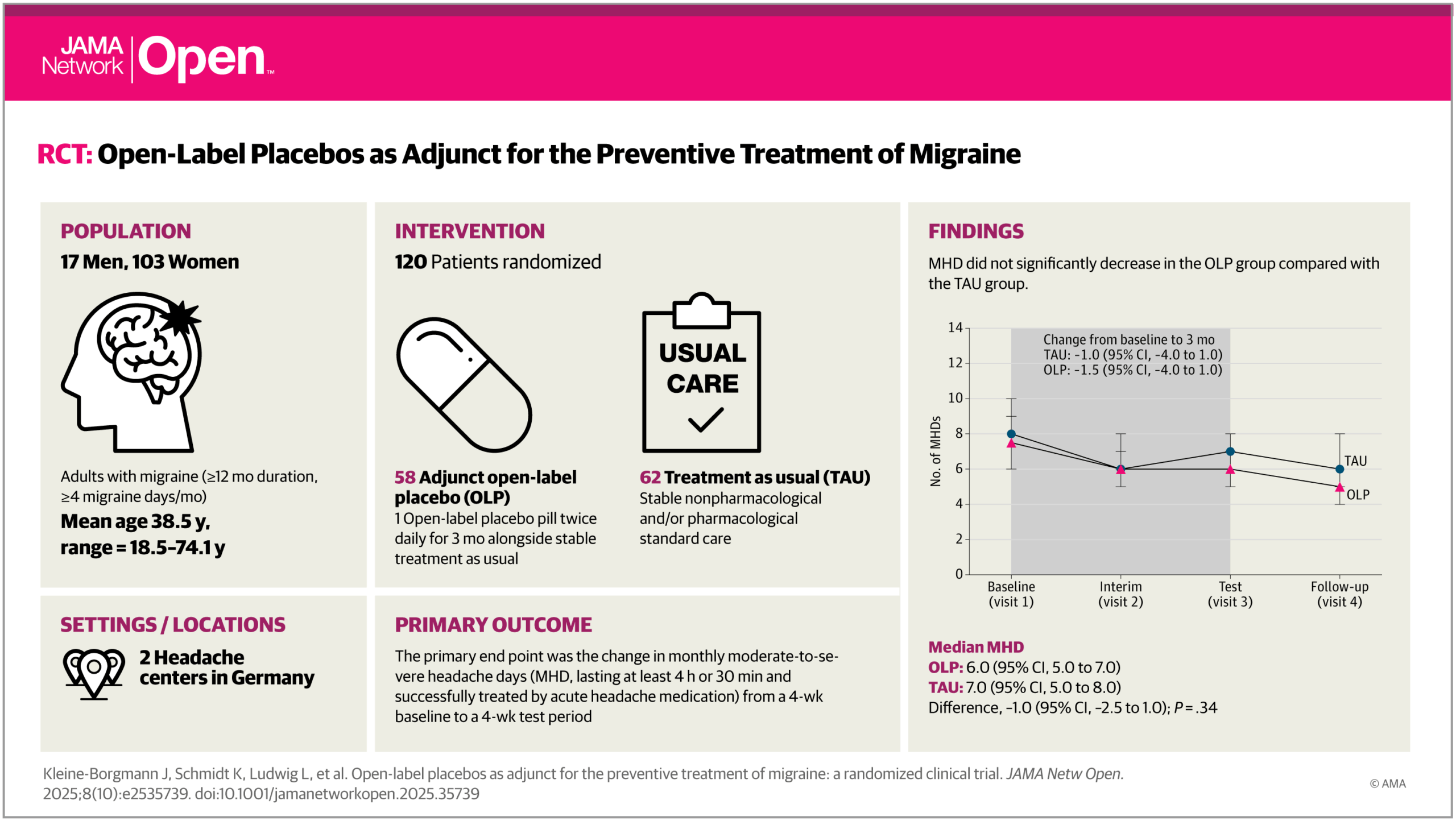
New publication: Open-label placebos as adjunct for migraine prevetion
A new study from our team, published in JAMA Network Open (October 2025), shows that open-label placebos (OLPs)—placebos honestly described as such—can meaningfully improve quality of life in people with migraine when added to standard preventive treatment. While OLPs did not reduce headache frequency, patients receiving OLPs reported less pain-related disability and felt significantly better overall. These findings, led by Julian Kleine-Borgmann and Katharina Schmidt, and conducted in collaboration with the Frankfurt Headache Center within the DFG-funded CRC 289 Treatment Expectation, suggest that OLPs may represent an ethical and safe add-on option to enhance patient-centered migraine care. Read the full article in JAMA Network Open.

The Bingel Laboratory
Prof. Dr. med. Ulrike Bingel
Clinical Neurosciences
University Hospital Essen
Department of Neurology
Hufelandstraße 55
45147 Essen
Germany
Fon: +49 (0) 201 723 - 2446
Fax: +49 (0) 201 723 - 6882
Mail: ulrike.bingel@uk-essen.de
Copyright 2021 - Bingel Laboratory